
TPU vs TPH PPF: Which Paint Protection Film Is Better?
✏ A Nath | 🔖 Paint Protection Film
Paint Protection Film (PPF) is one of the most effective ways to protect a car's original paint from road debris, stone chips, scratches, UV rays, and everyday wear. But when you start comparing PPF options, you may come across two common terms: TPU PPF and TPH PPF.
At first, the difference may seem simple. TPU is generally considered the more premium option, while TPH is often positioned as a more affordable alternative. However, the actual performance of a PPF depends on much more than the material name. Film construction, topcoat, adhesive, thickness, UV resistance, warranty, and installation quality can all affect the result.
So, TPU vs TPH PPF, which one is better?
What Is TPU PPF?
TPU stands for Thermoplastic Polyurethane. It is a flexible polymer widely used in modern paint protection films because it combines elasticity, durability, and resistance to everyday environmental exposure.
TPU PPF can conform well to curved body panels, which makes it suitable for modern cars with complex shapes and sharp design lines. High-quality TPU films can also offer good optical clarity and may be available with advanced topcoats that provide self-healing and hydrophobic properties.
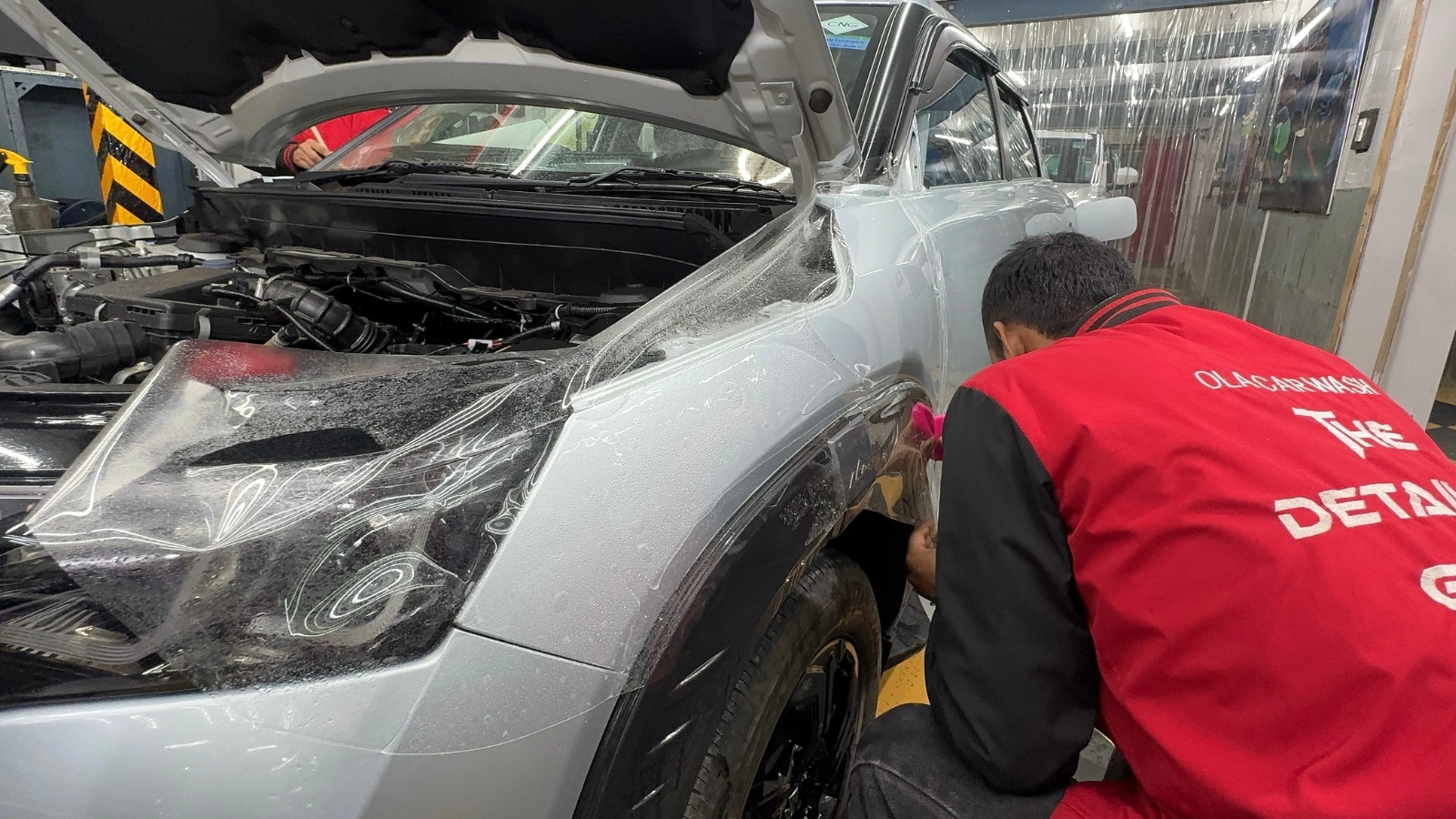
One important point is that not every TPU PPF has the same performance. Different manufacturers can use different TPU grades, topcoat technologies, and adhesive systems. Therefore, simply seeing "TPU" on a product specification does not automatically mean it is a premium PPF.
When comparing TPU films, look at the complete product specification, warranty, and manufacturer rather than the material name alone.
What Is TPH PPF?
TPH "Thermoplastic Hybrid" is a polymer that is made from Polyvinyl Chloride (PVC). It is cheaper than TPU and works better than PVC Films. Even though PVC is the base of TPH Film, the technology used improves PVC's flexibility and chemical properties.
TPH films are generally positioned as a more budget-friendly alternative to premium TPU films. They can provide a basic layer of protection against minor scratches, dirt, and everyday surface wear, depending on the quality of the particular product.
The main advantage of TPH PPF is often its lower purchase and installation cost. However, lower-cost films can differ from premium TPU products in areas such as flexibility, optical clarity, long-term durability, and resistance to yellowing.
For this reason, it is better to compare the actual specifications, warranty, and manufacturer instead of assuming that every TPH film performs the same way.
Difference Between TPU and TPH Paint Protection Film?
The main difference between TPU and TPH Paint Protection Film (PPF) is the material construction, flexibility, durability, appearance, and overall performance. TPU, or Thermoplastic Polyurethane, is generally considered a more premium PPF material, while TPH is commonly positioned as a more affordable alternative. However, the actual quality can vary between manufacturers.
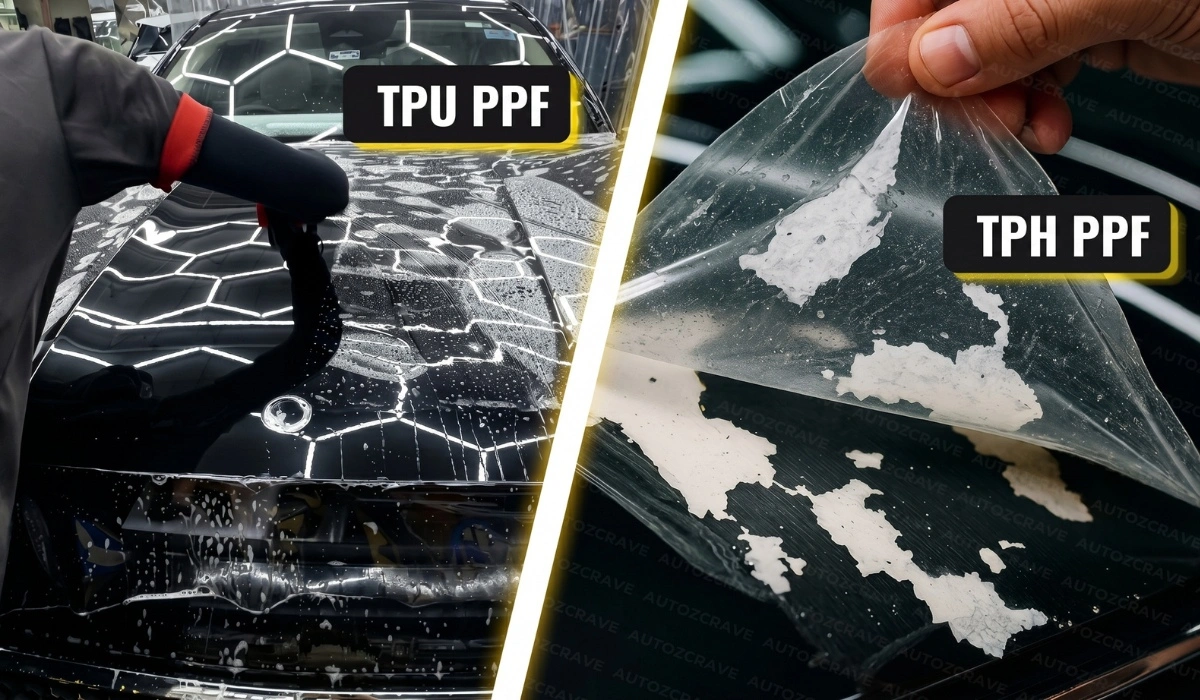
TPU vs TPH PPF Comparison Table
| Feature | TPU PPF | TPH PPF |
| Material | Thermoplastic Polyurethane | Hybrid/PVC-associated formulations can vary |
| Flexibility | Generally excellent | Generally moderate, product-dependent |
| Conformability | Excellent with quality film and installation | Depends on the product |
| Scratch resistance | Generally high | Moderate to high, depending on product |
| Impact protection | Generally better | Varies by product |
| Self-healing | Available in many premium products | Product-dependent |
| Optical clarity | Generally excellent in premium films | Depends on film quality |
| Yellowing resistance | Generally better in premium films | More variable |
| Long-term durability | Generally higher | Generally lower, product-dependent |
| Price | Higher | Usually lower |
| Best suited for | Long-term and premium protection | Budget-focused protection |
The table should be treated as a general comparison. A specific TPH film can outperform a poor-quality TPU film, so always check the actual product specifications.
TPU vs TPH PPF: Key Differences
1. Material: TPU is a type of thermoplastic polyurethane that has outstanding physical properties and chemical stability. It is a well-established, environmentally friendly material. On the other hand, TPH enhances the flexibility of traditional materials by incorporating plasticizers.
2. Quality: TPU possesses excellent toughness and a robust thermal repair capability. On the other hand, TPH is fragile during use, lacks sufficient protective ability, and the adhesive layer chosen is prone to detachment. Consequently, this may result in offset printing or adhesive residue on the painted surface.
3. Service life: TPU typically lasts for a duration of 5-10 years, while TPH has a shorter lifespan of 1-3 years.
4. Malleability: The TPU material used in the PPF exhibits excellent flexibility, making it highly resistant to manual breakage. Moreover, it showcases an impressive stretching rebound effect. Conversely, the TPH material used in PPF lacks malleability and can easily be broken by hand.
5. Resist Scratches: TPU-based PPFs may develop scratches, but as long as they are not severely damaged, due to their self-healing properties, these scratches can be repaired automatically or cured using a hot air gun. On the other hand, TPH PPFs primarily depend on their hardness to withstand scratches. However, if scratches occur on vehicles, they will need to be replaced.
Read More :
- Tips to Verify Genuine Car PPF and Beware of Fake PPF
- Best Paint Protection Film - PPF Coating for Car
- Gloss vs Matte PPF
Final Verdict: TPU vs TPH PPF
So, TPU vs TPH PPF, which is better?
For most car owners looking for long-term paint protection, high-quality TPU PPF is generally the better choice. It offers excellent flexibility and conformability, and premium products can provide strong impact protection, optical clarity, UV resistance, and self-healing topcoats.
TPH PPF can make sense when budget is the main consideration, but its performance can vary significantly between products. That is why you should not choose PPF based only on the words "TPU" or "TPH."
The better approach is to compare the actual film, manufacturer, topcoat, warranty, specifications, and installation quality.
Our Workshop location - Ground Floor, X-14, F Block, Pocket X, Okhla Phase II, Okhla Industrial Estate, New Delhi, Delhi 110020📌
Frequently Asked Questions
1. Which PPF is better, TPU or TPH?
Ans. TPU PPF is a highly flexible material when compared to TPH. It can stretch up to 300% more than TPH; due to this characteristic, it becomes extremely challenging to puncture it with a screwdriver. Additionally, in comparison to PVC films, it offers a greater level of durability.
2. Is TPU better than PVC?
Ans. TPU is superior to PVC in terms of performance. This makes TPU a suitable replacement for PVC. TPU-coated webbing and PVC-coated webbing have their own advantages and disadvantages in terms of performance.
3. What is the best PPF material?
Ans. TPU is the most hydrophobic paint protection film you can find. This is because of its advanced topcoat.
4. Is TPU more expensive than PVC?
Ans. TPU-made items have a higher-quality appearance compared to products made from regular polymers. TPU is pricier than PVC, costing around 30% to 40% more. The elevated cost often deters designers and sellers from utilizing these superior materials.
