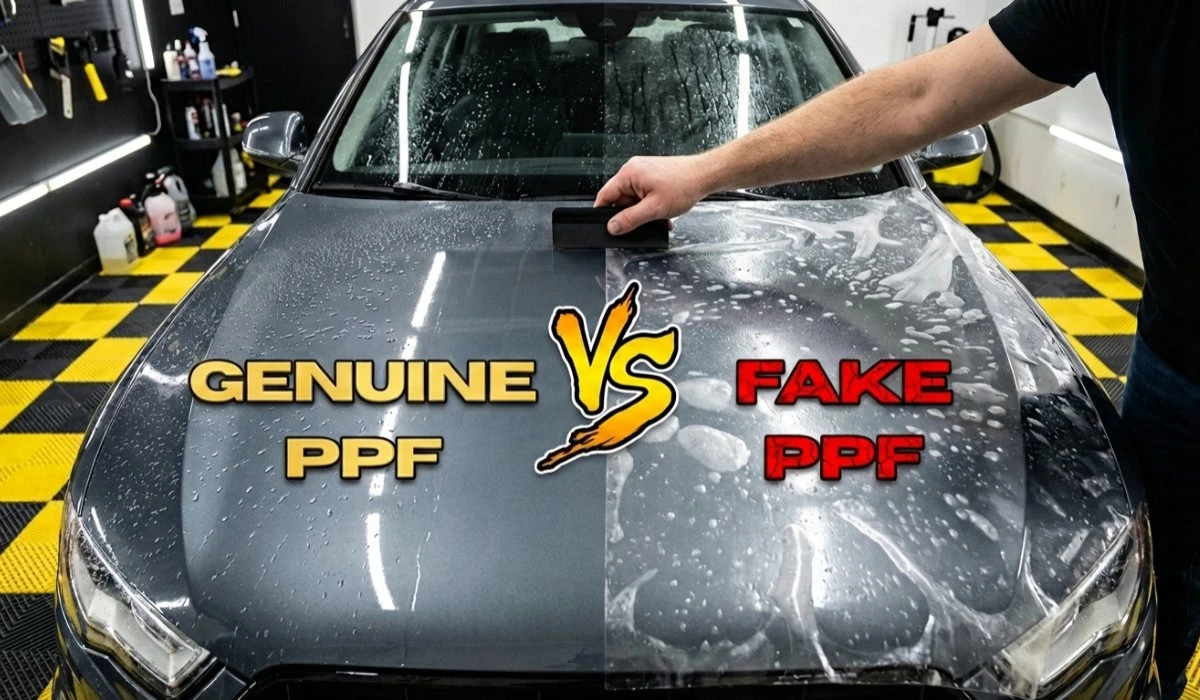
Tips to Verify Genuine Car PPF and Beware of Fake PPF
✏ A Nath | 🔖 Paint Protection Film
Introduction
Paint Protection Film, or PPF, has become increasingly popular among car owners who want to protect their vehicle's original paint from stone chips, scratches, road debris, stains and everyday wear. As demand for PPF has increased, so have the number of products and price options on the market.
For customers, this creates a simple but important question: How do you know whether the PPF being offered is actually the product the seller claims it is?
This becomes even more important when you receive two very different quotations for what appears to be the same PPF. One studio may quote ₹80,000, while another may offer what it calls the same type of PPF for ₹40,000. Is the cheaper one fake? Is the expensive one automatically genuine? Not necessarily.
The problem is that most car owners are not PPF experts. They may know the brand name, thickness or the word "self-healing," but they may not know how to verify the exact product, manufacturer, warranty or installation details. A film can also look perfectly clear and glossy after installation, yet its appearance alone cannot tell you everything about the product.
This is why knowing how to verify PPF before installation is more important than simply choosing the cheapest or most expensive quotation.
In this blog, we will explain what you should check before paying for PPF, how to compare different quotations, what questions you should ask the installer, how to verify warranty and product information, and which red flags you should not ignore.

Can You Tell if PPF Is Genuine Just by Looking at It?
Absolutely No!.
Two paint protection films can look almost identical after installation, while their material, specifications, warranty, manufacturer and performance can be completely different. This is why checking only the shine, thickness, packaging or appearance of PPF is not enough.
If you are planning to spend ₹50,000, ₹80,000, ₹1 lakh or more on paint protection film, you should know exactly what you are buying, who is supplying it, who is installing it and what warranty you are actually receiving.
The good news is that you do not need to be a PPF expert to make a better decision. You simply need to know what to verify before installation begins.
How Can You Verify Genuine PPF?
You cannot reliably confirm genuine PPF from appearance alone. Before installation, verify the brand, exact product series, manufacturer, material and specifications, authorised installer where applicable, warranty, invoice, coverage and installation terms. If the seller claims the film is an authorised branded product, verify that claim through the manufacturer's official channels whenever possible.
For example, manufacturers such as 3M provide product-specific warranty information and authorised-installer guidance, while XPEL provides an official authorised installer locator.
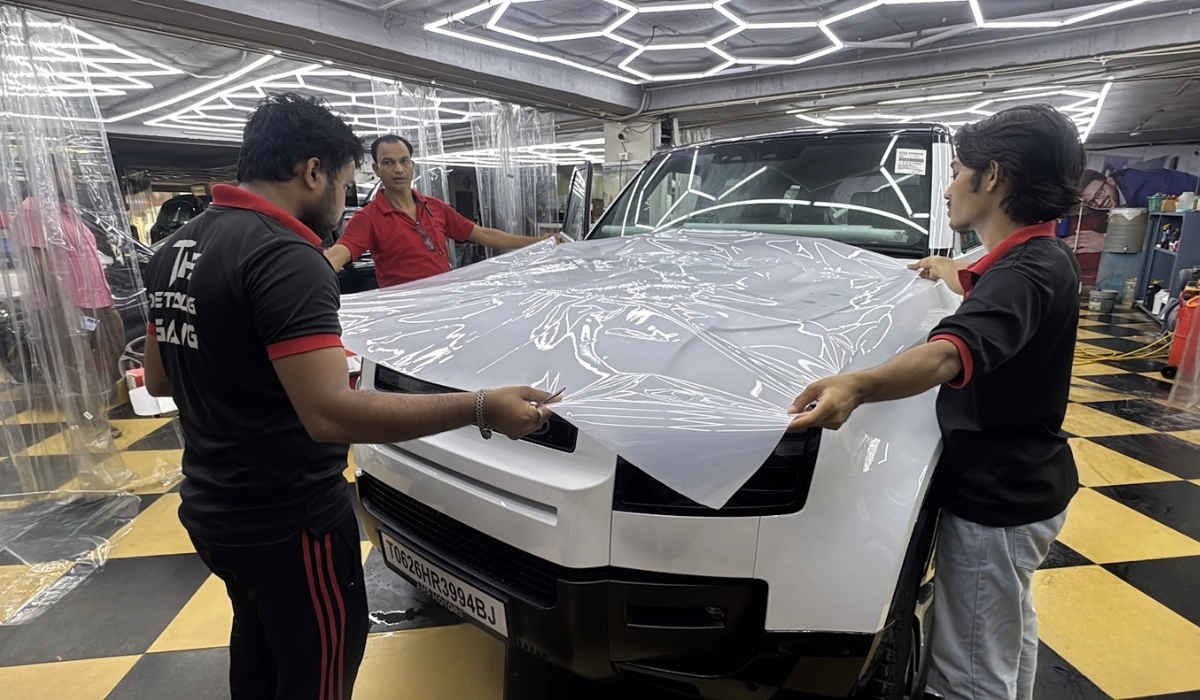
What Does "Genuine PPF" Actually Mean?
When people say genuine PPF, they usually mean that the product being sold is actually the product the seller claims it to be.
For example, if a studio tells you that your car will receive a particular branded PPF, you should be able to establish:
- The actual brand
- The exact product or series
- The manufacturer
- The material and specifications
- The applicable warranty
- The installation arrangement
- The coverage included in your quotation
This distinction is important because a lesser-known PPF brand is not automatically fake, and a famous brand name alone does not prove that the film being installed is genuine.
The real question is: Can the seller clearly demonstrate what product you are actually buying?
Read More :
- Reality of Car PPF in the Delhi Market: Dos and Don'ts
- Comparison between TPU vs.TPH PPF (Paint Protection Film)
- Best Paint Protection Film for Cars | Top Brands and Updated Price: 2026
- Fake vs Genuine PPF
Branded vs Non-Branded PPF: What Is the Difference?
PPF products can broadly be divided into branded and non-branded options, although the market is more complicated than simply calling one genuine and the other fake.
Branded PPF
A branded PPF normally has an identifiable manufacturer or brand, defined product specifications, and published product information. Depending on the manufacturer, customers may also have access to authorised installers, warranty documentation, product registration, or other verification processes.
For example, 3M publishes specific PPF product information, warranty resources, and authorised-installer guidance.
Non-branded or lesser-known PPF
A generic or lesser-known PPF is not automatically poor quality.
The important question is whether the seller can provide reliable information about:
- Material
- Product specifications
- Manufacturer
- Warranty
- Performance claims
- Installation
- Product origin
The risk increases when a seller makes statements such as: This is exactly the same as a premium brand. or This is imported branded material at half the price. If such claims cannot be supported with documentation, you should ask more questions before paying.
Fake, Lookalike, Misrepresented, and Unverified PPF Are Not the Same Thing
This distinction is important. A customer may encounter several different situations in the market.
Lookalike product
- A product whose branding or packaging resembles an established brand.
Misrepresented product
- A film sold with claims about its material, origin, thickness or performance that cannot be substantiated.
Unverified product
- A product where the seller cannot clearly identify the manufacturer, specifications or warranty.
Defective or off-specification product
- A product that may have a quality issue, but the exact condition and reason need to be established with evidence.
These categories should not automatically be treated as identical.
For example, calling something "rejected stock", "B-grade", or "first-copy" does not make that claim true. The seller needs evidence to support such statements.
The safest approach is simple: Don't judge the film only by what it looks like. Verify what the seller says it is.
Why Do Customers Get Attracted to Cheap PPF?
There is nothing wrong with wanting a good price. PPF can be a significant expense, especially when a customer is considering full-body coverage. The problem starts when two sellers claim to be offering the same product, but there is a large difference in price, and nobody explains why.
A customer may not know the difference between:
So a cheaper quotation naturally looks attractive.
- Different PPF series
- Different material
- Different thickness
- Different coverage
- Different installation methods
- Different warranty arrangements
- Different operating costs
- Different after-sales support
So a cheaper quotation naturally looks attractive.
But remember: A low price does not automatically prove that PPF is fake.
At the same time, a high price does not automatically prove that PPF is genuine. The correct approach is to compare the complete package, not just the final number.
Is Branded PPF Only for Luxury Car Owners?
Surely No!. Branded PPF is often associated with premium and luxury cars because some owners are willing to spend more on paint protection. But genuine branded PPF is not exclusively for wealthy customers.
The right choice depends on:
- Your car
- Your budget
- How much you drive
- Where you drive
- Parking conditions
- How long you plan to keep the car
- How much paint protection you actually need
If full-body premium PPF is outside your budget, you can consider:
- Another genuine PPF product
- Partial PPF
- Protection for high-impact areas
- Delaying the installation until you can make a properly informed decision
You do not have to buy the most expensive PPF. You simply need to understand what you are paying for.
10 Checks to Verify Genuine PPF Before Installation
This is the most important section of this blog. Before paying for PPF, go through these checks.
1. Check the Exact PPF Brand
Do not accept only terms such as:
- Premium PPF
- Imported PPF
- High-quality PPF
- Luxury PPF
- 8-year PPF
- Self-healing PPF
Ask: What is the exact brand name?
If the seller says it is a branded product, ask them to identify the brand clearly in the quotation. A logo on a wall or website is not enough.
2. Check the Exact Product Series
Knowing the brand is only the first step. Many manufacturers offer multiple PPF products or series with different specifications and warranties. For example, 3M's current PPF information lists different series with different thicknesses and warranty periods.
So instead of asking: Is this 3M PPF?
Ask: Which exact 3M PPF series are you installing?
The same principle applies to every manufacturer. The exact product matters.
3. Ask Who Actually Manufactures the Film
This is one of the simplest questions you can ask: Who manufactures this PPF?
If the seller gives you a brand name, ask for the manufacturer's product information.
You should be able to understand:
- Who makes the film
- What product you are receiving
- What material it uses
- What specifications apply
- Who provides the warranty
Do not rely entirely on verbal statements such as: "It is the same factory". or "It is OEM material". Ask for something you can verify.
4. Check the Material and Technical Specifications
Ask the installer for the product specifications.
Depending on the product, this may include:
- Material
- Thickness
- Finish
- Optical clarity
- Self-healing characteristics
- Stain resistance
- Hydrophobic properties
- Adhesive characteristics
- Warranty period
But remember: Thickness alone does not establish PPF quality.
A thicker film is not automatically a better film. Material, adhesive, optical clarity, durability, installation characteristics and other specifications also matter. If a seller says the film is TPU, ask for product documentation supporting that claim rather than assuming every transparent PPF has the same material composition.
5. Verify the PPF Installer
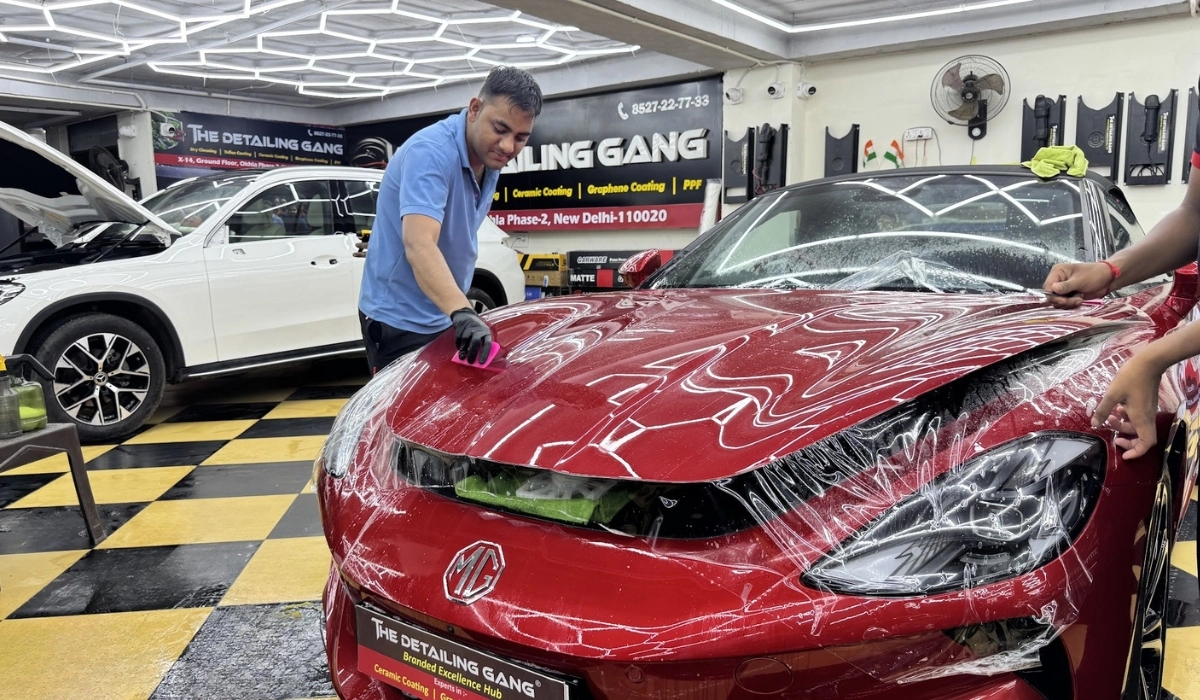
The product is only one part of the equation. Installation quality also matters. Where a manufacturer provides an authorised-installer system, check the installer through the manufacturer's official website or customer support.
For example:
- XPEL provides an official authorised installer locator, including listings for Delhi and the NCR region.
- 3M also directs customers toward authorised installers for its PPF products.
But don't stop at the word authorised.
Also look at:
- Previous PPF work
- Edge finishing
- Difficult panels
- Installation environment
- Cleanliness
- Experience
- After-sales support
- How installation defects are handled
A genuine PPF installed poorly can still give you a disappointing result.
6. Verify the Warranty
Do not simply ask: How many years' warranty?
Ask: Who provides the warranty and how does it work?
Find out: A warranty document by itself does not prove that a film is genuine.
For example:
- 3M has a warranty registration process involving vehicle and installation information.
- XPEL's published warranty information also refers to documentation such as warranty proof and the original receipt identifying coverage areas.
The process differs between manufacturers, so always check the actual terms for the product you are buying.
7. Ask for a Proper Invoice
This is one of the simplest ways to protect yourself. Your quotation or invoice should clearly describe what you are purchasing.
Where applicable, make sure it identifies:
- Brand
- Service
- Coverage
- Product/series
- Applicable taxes
- Warranty information
- Other important terms
If the quotation simply says: Full Car PPF - ₹XX,XXX. Ask for more details.
A proper invoice does not magically authenticate a product, but it gives you written evidence of what the seller represented that you purchased.
Keep:
- Quotation
- Invoice
- Installation details
- Warranty documents
- Product documentation
for future reference.
8. Confirm Exactly What Areas Are Covered
This is where many price comparisons become misleading.
- One studio may quote ₹60,000 for a selected package.
- Another may quote ₹90,000 for much more extensive coverage.
The two prices cannot be compared fairly without understanding the coverage.
Ask:
- Is it full-body PPF?
- Is the roof included?
- Are bumpers included?
- Are mirrors included?
- Are door edges included?
- Are pillars included?
- Are headlights included?
- Is the boot included?
- Are difficult areas included?
Get the coverage clearly mentioned in the quotation.
9. Ask to See the Product Before Installation
Do not wait until the PPF is already installed to start asking questions. Before installation, ask the studio to show you the product information and packaging available for the film being installed.
Check:
- Brand
- Product series
- Warranty information
- Product documentation
- Manufacturer information
- Available product or roll identification, where applicable
Not every manufacturer uses the same identification system, so do not assume that every PPF must have a serial number or authentication code. Where the manufacturer provides a product, roll, batch or warranty identifier, ask how it can be verified through the official channel.
10. Compare the Complete Package, Not Just the Price
This is perhaps the most important rule in the entire article.
Suppose:
- Studio A: ₹80,000
- Studio B: ₹40,000
Do not immediately say: Studio B is selling fake PPF.
And do not immediately say: Studio A is overcharging.
First compare:
Only after comparing these details can you understand whether the two quotations are actually comparable.
| What to Check | Studio A | Studio B |
| Brand | ? | ? |
| Exact product series | ? | ? |
| Material | ? | ? |
| Thickness/specifications | ? | ? |
| Coverage | ? | ? |
| GST included? | ? | ? |
| Authorised installer? | ? | ? |
| Warranty | ? | ? |
| Installation | ? | ? |
| After-sales | ? | ? |
| Invoice | ? | ? |
Only after comparing these details can you understand whether the two quotations are actually comparable. Don't compare prices. Compare what you are getting for the price.
Genuine PPF vs Unverified PPF: What Should You Check?
| Check | More Verifiable | Red Flag |
| Brand | Exact brand identified | “Premium PPF” only |
| Product | Exact series identified | No product name |
| Manufacturer | Clearly identified | Unclear origin |
| Specifications | Written product information | Verbal claims only |
| Material | Documented | Unsupported claim |
| Warranty | Clear issuer and terms | Lifetime warranty” with no details |
| Installer | Verifiable where applicable | Only a logo displayed |
| Invoice | Product/service identified | Generic description |
| Coverage | Clearly defined | Full car without details |
| Price | Explainable | Large difference with no explanation |
Remember, a red flag does not automatically prove that a product is fake.
It means: Stop, ask questions and verify before paying.
8 PPF Red Flags You Should Not Ignore
Be careful if a seller:
- Refuses to identify the exact product.
- Cannot tell you who manufactures the film.
- Says it is “the same as” a famous brand without evidence.
- Makes technical claims but cannot provide specifications.
- Promises a warranty but cannot explain who provides it.
- Cannot explain what happens if the film develops a defect.
- Gives you a quotation without clearly defining coverage.
- Pressures you to make an immediate payment because the offer is only for today.
Again, none of these points alone proves that the PPF is fake. But several of them together should make you slow down and verify the product.
Why Is One PPF Quote Much Cheaper Than Another?
A price difference can have completely legitimate reasons.
The difference may come from:
- Different PPF series
- Different material
- Different film specifications
- Different vehicle size
- Different coverage
- Different installation process
- Different labour costs
- Different operating costs
- Different warranty arrangements
- Different after-sales support
- Promotional pricing
For example, even within a single manufacturer, different PPF products can have different specifications and warranty periods. 3M's India PPF material lists multiple series with different thicknesses and warranty periods, while Garware publishes different PPF variants with different warranty terms.
Therefore, ₹40,000 vs ₹80,000 does not automatically mean fake vs genuine.
The first question should be: Are these actually the same product and the same service?
What About TPU, TPH, and Other PPF Materials?
Material is worth checking, but don't turn this into a simple TPU = genuine, everything else = fake argument.
Ask the seller what material the particular product uses and request product documentation. Also remember that PPF performance is not determined by one specification alone.
A proper comparison should consider:
- Material
- Thickness
- Adhesive
- Optical clarity
- Self-healing characteristics
- Durability
- Stain resistance
- Warranty
- Installation requirements
If you want to understand TPU and TPH in greater detail, you can link to your dedicated TPU vs TPH PPF article rather than making this article unnecessarily long.

What Should You Check Before, During, and After PPF Installation?
Before Installation
Confirm:
- Brand
- Product series
- Material
- Specifications
- Warranty
- Installer
- Coverage
- Price
- Invoice
During Installation
Check:
- The workspace is clean
- Coverage matches your quotation
- The agreed product is being installed
- The installer handles the film properly
- Difficult areas are being handled carefully
You do not need to stand over the installer every second. The point is simply to understand what is being done to your car.
After Installation
Inspect:
- Edges
- Corners
- Curves
- Bumpers
- Mirrors
- Door edges
- Visible contamination
- Lifting
- Installation defects
Then collect:
- Invoice
- Warranty documentation
- Registration information, if applicable
- After-sales instructions
The exact warranty and curing requirements vary by product, so follow the manufacturer's instructions. For example, Garware's published warranty terms specify installation by a certified or authorised professional installer and include specific care requirements.
Someone Offered You PPF at Half the Price. What Should You Do?
Don't panic. And don't immediately assume it is fake.
Ask these questions:
- What is the exact brand?
- What is the exact product series?
- Who manufactures it?
- What material is it?
- What are the published specifications?
- Who provides the warranty?
- Can the warranty be registered or verified?
- What areas are included?
- Is the installer authorised where applicable?
- Will I receive a proper invoice?
If the seller answers all of these clearly, you have something to compare.
If the seller cannot explain the product and simply keeps saying: Sir, same quality hai, tension mat lo. then you have a reason to step back.
A Simple Real-World Example
Imagine you have purchased a new SUV and want full-body PPF.
You receive two quotations.
Option A
- Clearly identified brand
- Exact product series
- Written specifications
- Defined coverage
- Manufacturer-backed warranty
- Verifiable installer
- Proper invoice
Option B
- Lower price
- Imported premium PPF
- No exact product series
- No clear manufacturer
- Verbal warranty
- Unclear coverage
Option B may look attractive because of the price. But you still don't have enough information to establish that both packages are equivalent.
The sensible approach is not to accuse the second seller of selling fake PPF. Instead, ask for the missing information.
- If the seller can provide it and the product checks out, compare both offers properly.
- If the seller cannot provide reasonable information, consider another option.
This is an illustrative example, not an allegation about any particular seller.
What If Genuine PPF Is Outside Your Budget?
You don't have to force yourself into buying the most expensive PPF.
Consider:
Different genuine products:
- There may be several legitimate PPF options at different price points.
Partial PPF
- You can protect areas that receive more road impact, depending on your requirements.
Wait
- If you are not comfortable with the available options, you can always research more and install PPF later.
Other paint protection options
Ceramic coating can make the surface easier to maintain and provide protection against certain contaminants, but it should not be treated as an equivalent replacement for PPF against stone chips.
The important thing is to choose protection based on your requirements rather than buying simply because someone tells you: You need PPF.
What Makes a Good PPF Deal?
A good deal is not necessarily the cheapest quotation.
It is a package where you understand:
- What film you are buying
- Who manufactures it
- What specifications it has
- Who is installing it
- What areas are covered
- What warranty applies
- What documentation you receive
- What happens if something goes wrong
That is far more useful than simply negotiating another ₹5,000 or ₹10,000 off the quotation.
Your PPF Verification Checklist
Before paying for PPF, save this checklist.
PPF Verification Checklist:
- Exact brand identified
- Exact product series identified
- Manufacturer identified
- Material/specifications documented
- Thickness checked
- Warranty issuer identified
- Warranty terms understood
- Warranty registration/verification understood
- Installer verified where applicable
- Coverage clearly mentioned
- Invoice received
- Installation and after-sales terms explained
If you cannot get clear answers, don't rush. Take the quotation, compare another option, and make the decision after you understand what you are actually buying.
Final Thoughts: Buy What You Can Verify, Not Just What You Can Bargain For
A popular Hindi saying is: Har chamakti cheez sona nahi hoti. Not everything that shines is gold.
The same thinking applies to PPF.
A film may look glossy. The packaging may look premium. The seller may make impressive claims. The price may look unbelievably attractive. But none of these things, by themselves, prove what product is actually being installed on your car. At the same time, you should not assume that every cheaper PPF is fake or that every expensive branded PPF is automatically the right choice.
The smarter approach is to verify. Before installing PPF, check the:
- Brand
- Product series.
- Manufacturer.
- Material.
- Specifications.
- Installer.
- Warranty.
- Coverage.
- Invoice.
- Installation process.
Then compare the complete package.
The goal is not to buy the most expensive PPF.
- It is not to buy the cheapest PPF either.
- The goal is to know exactly what you are paying for.
Buy what you can verify, not just what you can bargain for.
Frequently Asked Questions About Genuine and Fake PPF
Q1. How can I identify genuine PPF?
Ans. You should not rely on appearance alone. Check the exact brand, product series, manufacturer, material specifications, warranty, installer, coverage and invoice. Where the manufacturer provides an official verification or authorised-installer system, use it.
Q2. Can fake PPF look like genuine PPF?
Ans. Yes. Appearance alone is not a reliable authentication method. Two films can look similar after installation while having different materials, specifications, warranties and manufacturers.
Q3. Can I verify PPF using a serial number?
Ans. Sometimes a manufacturer may provide a product, roll, batch or warranty identification system, but this is not universal. Ask the manufacturer or authorised installer whether the particular product has an official verification method.
Q4. Does a PPF warranty prove that the film is genuine?
Ans. Not by itself. A warranty should be checked for its issuer, product, coverage, registration process and terms. Where possible, verify it through the manufacturer's official system. Manufacturer warranty processes vary.
Q5. Does cheap PPF mean it is fake?
Ans. No. A lower price can result from a different product, coverage, vehicle size, installation process, operating costs or promotion. However, if a seller claims that a very cheap product is exactly the same branded product with identical specifications and warranty, ask for evidence.
Q6. Is branded PPF always better than non-branded PPF?
Ans. Not automatically. A lesser-known product is not automatically poor quality. What matters is whether the manufacturer, specifications, performance claims, warranty and origin can be reliably established.
Q7. Is thicker PPF always better?
Ans. No. Thickness is only one specification. Material, adhesive, optical clarity, durability, self-healing characteristics, stain resistance and installation performance also matter.
Q8. How do I check if a PPF installer is authorised?
Ans. If the manufacturer provides an authorised-installer locator, search for the studio through the manufacturer's official website. For example, XPEL provides an official installer locator, while 3M provides authorised-installer guidance for its PPF products.
Q9. Can I verify PPF after it has already been installed?
Ans. It can be more difficult after installation because you may no longer be able to inspect the original product packaging or roll. This is why you should verify the product, warranty and documentation before installation and retain your invoice and warranty information afterward.
Q10. What should I do if a seller refuses to provide PPF product details?
Ans. Don't rush into the installation. Ask for the exact brand, product series, manufacturer, specifications, warranty, and coverage in writing. If the seller cannot provide reasonable information, compare another installer or product.
