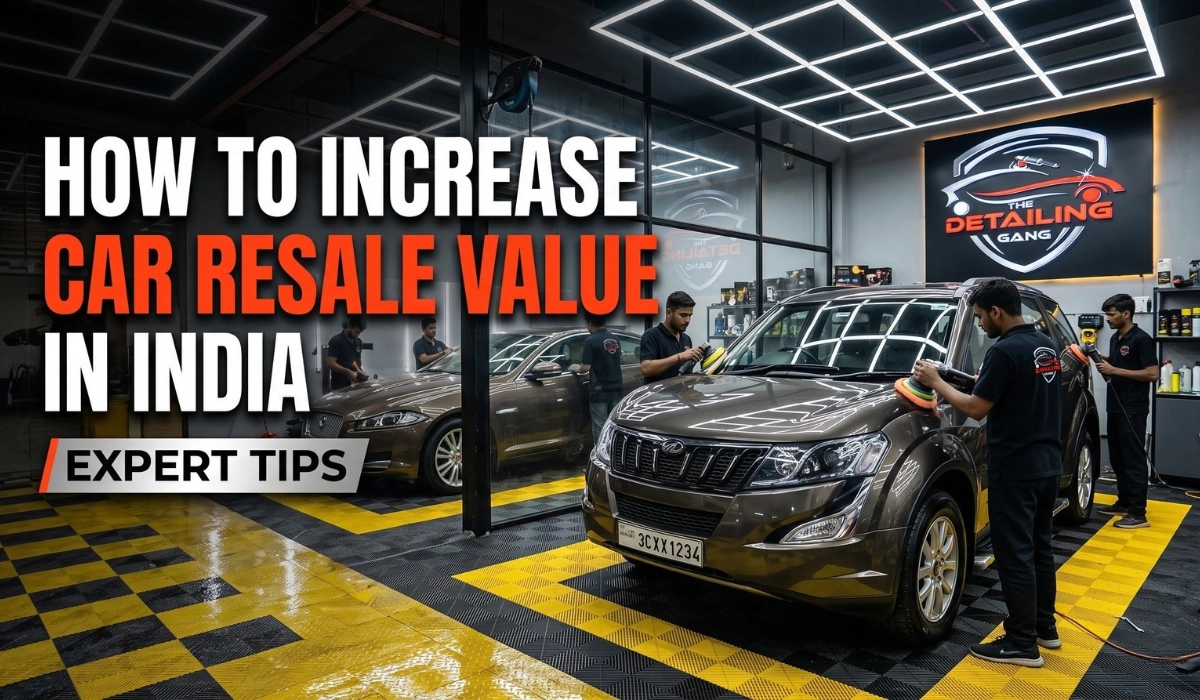
How to Increase Car Resale Value in India: Expert Tips
✏ A D Nath | 🔖 Car Care
Selling a car isn't just about finding a buyer. It is about giving that buyer enough confidence to pay the price you are asking. Two cars of the same model, year and variant can attract very different offers. One may look cared for, have a clean service history and still carry its original paint. The other may have faded paint, worn interiors, mismatched panels, old tyres and incomplete records.
That difference is where resale value is won or lost. If you are wondering how to increase car resale value, the answer is not one expensive upgrade. It comes down to how you maintain the car throughout ownership, how you protect its condition and how well you present it when it is finally time to sell.
Current used-car valuation guidance also points to factors such as age, mileage, condition, number of owners, service history, visible damage, tyres, insurance and documentation. Professional detailing can also improve the way a used car presents itself to potential buyers. Here is what actually matters.
What Determines Your Car's Resale Value?
Before spending money on your car before selling it, understand what buyers and used-car evaluators usually look at.
The major factors include:
- Age of the car
- Kilometres driven
- Make, model and variant
- Number of previous owners
- Service and maintenance history
- Accident history
- Exterior paint condition
- Interior condition
- Tyre condition
- Mechanical condition
- Insurance and ownership records
- Original parts and equipment
- Aftermarket modifications
- Overall presentation
Some of these factors are outside your control. You cannot change the age of your car or undo kilometres already driven. But you can control how well you've maintained the car.
That is where smart car ownership makes a real difference.
1. Follow the Service Schedule
The first rule is simple. Do not treat servicing as something you do only when the car develops a problem. Follow the service schedule recommended by the manufacturer. Keep the engine oil, filters, fluids, brakes, battery, tyres and other wear items in proper condition.
A buyer feels much more comfortable with a car that has been serviced on time than one where the owner says, "Everything is fine, don't worry." The difference is proof. Keep your service invoices, job cards and maintenance records. A complete service history gives the next owner a clearer picture of how the car was treated.
CARS24 and other used-car sources also place documented maintenance and genuine parts among the factors that can support a stronger used-car valuation.
2. Protect the Original Paint
This is one area where car owners often realise the importance of maintenance too late. Your paint is constantly exposed to Delhi dust, road grime, bird droppings, tree sap, sunlight, hard water, traffic pollution and minor scratches. Over several years, these small things add up.
Look closely at a five-year-old car that has spent most of its life outdoors. You may notice:
- Swirl marks
- Scratches
- Stone chips
- Water spots
- Faded paint
- Oxidation
- Dull clear coat
- Scratched door handles
- Damaged bumper areas
A buyer notices these things too. The exterior creates the first impression before the buyer checks the engine, documents or service history. A clean and well-preserved exterior suggests that the owner has taken care of the rest of the car as well. This is why paint care should start years before you decide to sell.
3. PPF Can Help Preserve Factory Paint
Paint Protection Film, commonly called PPF, is designed to protect the original paint from everyday damage such as stone chips, minor scratches and road debris. The important point is this: PPF does not magically increase the market value of every car. Its real value is preventive.
If you install good-quality PPF when the paint is still in excellent condition and maintain it properly, you can help keep the original paint looking better for longer. That can matter when you eventually sell the car. Imagine two five-year-old cars of the same model. One has heavily chipped bumpers, scratches around the door handles and visible swirl marks. The other still has clean, consistent factory paint.
Which one creates more confidence during the first inspection? Usually, the second one. The resale benefit comes from preserving the condition of the vehicle, not from simply having a PPF certificate or invoice.
4. Do Not Wait Until Selling Time to Detail the Car
One of the biggest mistakes owners make is ignoring the car for years and then spending heavily on it two weeks before selling. A professional detail can improve the appearance of a used car, but detailing cannot reverse every form of wear. Deep scratches, damaged paint, cracked plastics, worn leather and neglected interiors may require more than cleaning.
Regular detailing is therefore more sensible than a last-minute makeover. Exterior detailing can address contamination, surface dirt, light defects and loss of gloss. Interior detailing can remove accumulated dirt, stains and unpleasant odours while making the cabin feel cleaner and better maintained.
5. Take Interior Condition Seriously
Many owners focus entirely on the outside of the car. But spend five minutes inside a used car and you can often tell how it was treated.
Look at:
- Steering wheel
- Driver seat
- Dashboard
- Door pads
- Centre console
- Floor carpets
- Door handles
- Switches
- Roof lining
- AC vents
- Boot area
A dirty cabin, stained seats, excessive scratches and unpleasant smells can immediately make the car feel older. Avoid eating regularly inside the car, clean spills quickly and do not allow dirt to build up for months. If you carry children or pets, pay even more attention to the seats, door panels and carpets. The goal is simple: when a potential buyer opens the door, the cabin should feel clean, fresh and properly cared for.
6. Fix Small Scratches, Dents and Cosmetic Damage
Small damage becomes surprisingly powerful during price negotiations. A buyer may see a scratched bumper and think, "What else has this owner ignored?" That is why small issues should not be allowed to pile up.
Before selling, inspect:
- Bumpers
- Door edges
- ORVMs
- Door handles
- Alloy wheels
- Headlamps
- Tail lamps
- Windshield
- Number plate area
- Small dents and scratches
Not every scratch needs repainting. This is important.
If you repaint a panel unnecessarily, you may create another concern because buyers can start wondering why the panel was painted. First determine whether the damage can be safely corrected through detailing, polishing, paint correction or a proper minor repair. The objective is not to make the car look artificially new. It is to present an honestly well-maintained car.
7. Avoid Cheap Repainting
This is where trying to save money can actually hurt you. A poor-quality repaint can leave differences in colour, texture or finish. Overspray, uneven clear coat and mismatched panels are easy to notice under strong light. More importantly, repainting can make a buyer wonder whether the vehicle was involved in an accident. If a panel genuinely needs repair, use a reputable facility and keep the repair records.
A documented repair is easier to explain than a mystery panel that looks different from the rest of the car. Garware's resale-value guide also highlights original paint condition and concerns around repainting as important considerations for used-car buyers.
8. Keep Your Tyres and Wheels in Good Condition
Tyres tell a story. A buyer can quickly notice uneven tyre wear, cracked rubber, very old tyres or damaged alloy wheels. Keep your tyre pressure correct and follow the manufacturer's recommendations for rotation, alignment and replacement.
Before selling, check:
- Tyre tread
- Uneven wear
- Tyre age
- Wheel alignment
- Wheel balancing
- Alloy wheel damage
- Spare tyre condition
Do not replace perfectly good tyres just because you want the car to look newer. But if the tyres are genuinely worn or unsafe, deal with the issue. A good-looking body sitting on four badly worn tyres does not create confidence.
9. Drive the Car Responsibly
Your driving habits eventually show up in the condition of the vehicle. Hard acceleration, harsh braking, hitting potholes at speed, careless clutch use and aggressive driving can increase wear on mechanical components. Smooth driving does not mean driving slowly everywhere.
It means treating the car properly. Avoid unnecessary stress on the engine, transmission, suspension, brakes and tyres. Regular maintenance combined with sensible driving gives you a better chance of having a mechanically healthy car when you eventually sell it.
10. Be Careful With Aftermarket Modifications
This is especially important if resale value matters to you. Not every modification adds value. A buyer may appreciate a useful dashcam or high-quality protective accessory. But aggressive body kits, loud exhausts, unusual paintwork, extensive electrical modifications or heavily altered interiors can reduce the number of buyers interested in the car.
The safest approach is simple. Protect the car rather than drastically changing it. Good-quality floor mats, practical protection and properly installed accessories are very different from modifications that change the character or mechanical setup of the vehicle. If you have modified the car, keep the original parts whenever possible. That gives you more options when it is time to sell.
11. Keep Every Important Document
A clean car with poor paperwork can still become a difficult sale.
Keep your:
- Registration Certificate
- Insurance documents
- PUC certificate
- Service records
- Repair invoices
- Warranty documents
- Spare key
- Owner's manual
- Loan closure documents, if applicable
Organise everything before you advertise the car. When a buyer asks about the vehicle's history, you should be able to answer with documents instead of guesses.
12. Protect the Car From Sun, Dust and Weather
Where you park your car matters more than many owners realise. Long-term exposure to harsh sunlight can affect exterior paint and the cabin. Dust and contamination can also accumulate on the paint, while bird droppings and other contaminants can damage the surface if left for too long.
Whenever practical, use covered parking. If you use a car cover, choose one that fits the vehicle properly and use it on a clean car. Putting a cover over a dusty car and repeatedly moving it around can create unnecessary surface scratches. For daily-use cars, regular washing with safe methods is far better than waiting until the car becomes heavily contaminated.
13. Ceramic Coating Is About Preservation, Not Magic
Ceramic coating is another option for owners who want easier maintenance and a well-kept exterior. A properly prepared and coated surface can make washing easier and protect against certain environmental contaminants. It can also help maintain gloss when the coating is maintained correctly.
But ceramic coating should not be sold as a guaranteed resale-value booster. It is better to think of it as part of a long-term paint-care plan. If it helps you keep the paint cleaner, glossier and better maintained for several years, that can improve the overall condition of the car when you sell it. That is the real benefit.
14. Do a Proper Pre-Sale Inspection
About one to two months before selling, stop thinking like the owner and start thinking like the buyer. Walk around the car in daylight. Check the paint from different angles. Open every door. Look inside the boot. Inspect the tyres. Turn on every light. Check the AC. Look at the windshield. Test the windows, mirrors and other important electrical functions.
Then ask yourself: "Would I pay my asking price for this car after seeing it?" This simple exercise can reveal problems you have stopped noticing because you see the car every day.
15. Spend Money Where It Actually Makes Sense
This may be the most important advice in the entire article.
- Do not spend Rs 1 lakh preparing a car that may only gain Rs 20,000 in perceived value.
- Resale preparation should be practical.
- Fix safety-related issues first.
- Then mechanical problems.
- Then obvious cosmetic defects.
- Then professional cleaning and detailing.
- Then the presentation.
- The goal is not to recover every rupee you have ever spent on the car.
- The goal is to avoid unnecessary deductions and present the vehicle in the best honest condition possible.
Can Car Detailing Increase Resale Value?
Yes, professional car detailing can help a car present better during resale, but it is important to understand what detailing can and cannot do. Detailing cannot change the age of the car, reduce its kilometres or erase an accident from its history. What it can do is improve the areas a buyer can immediately see and experience.
A proper pre-sale detailing package can address areas such as:
- Exterior cleaning
- Paint decontamination
- Safe polishing where appropriate
- Interior deep cleaning
- Seat and carpet cleaning
- Dashboard cleaning
- Glass cleaning
- Wheel and tyre cleaning
- Odour treatment
- Overall presentation
This is why detailing should not be viewed simply as "making the car shiny". Good detailing is about bringing back the condition that has been lost through everyday use. At The Detailing Gang, this is the part of car care we take seriously.
We work on the small details that owners often stop noticing after living with their cars for years. Paint condition, surface contamination, interior cleanliness and the overall finish all contribute to how the vehicle feels when someone sees it for the first time. For a car owner preparing to sell, the objective is not to hide the car's history. It is to show that the car has been cared for.
PPF vs Ceramic Coating for Resale Value
If you are buying a new car and already know you may sell it after a few years, paint protection is worth considering from day one. PPF is mainly about physical protection from road debris, stone chips and minor surface damage. Ceramic coating focuses more on surface protection, easier maintenance, gloss and resistance to certain contaminants. Neither guarantees a higher resale price.
The better question is: "Which option will help me keep my car in better condition for the years I own it?" That is the mindset that makes sense.
Final Car Resale Value Checklist
Before putting your car up for sale, check these points:
- Service history is complete
- Insurance and PUC are current
- RC and other documents are ready
- Original keys and manuals are available
- Tyres are in good condition
- Major mechanical issues are fixed
- Small dents and scratches are addressed where sensible
- Paint is clean and properly maintained
- Interior is deep cleaned
- Wheels and tyres are cleaned
- No unnecessary aftermarket modifications
- All important electrical features work
- The car has been professionally detailed if required
- You have checked the current market price before setting your asking price
The Best Way to Increase Car Resale Value Starts Long Before You Sell
There is no secret trick that suddenly turns an average used car into a high-value car. Resale value is built slowly.
Service the car on time. Drive it properly. Keep the records. Protect the paint. Look after the interior. Fix small problems before they become expensive. Avoid questionable modifications. And when the time comes to sell, present the car honestly and professionally.
That is how you protect the value of something you have already spent a lot of money buying. And from a detailing perspective, this is something we see again and again. A well-maintained car does not need to pretend to be new. It simply needs to show that its owner cared. That difference is visible the moment the buyer opens the door, looks at the paint and takes the first test drive.
Frequently Asked Questions
1. How can I increase my car's resale value?
Ans. Maintain your car regularly, keep complete service records, protect the original paint, clean the interior and repair minor damage where practical. Avoid unnecessary modifications and keep all important documents ready. Professional car detailing before selling can also improve the car's appearance and create a better first impression.
2. What is the 4 metre car rule?
Ans. In India, the 4 metre rule generally refers to tax benefits for qualifying small cars that measure less than 4,000 mm in length and meet other applicable government conditions, including engine and fuel-related criteria. It is not a rule that automatically determines a car's resale value.
3. Which car has a high resale value?
Ans. Cars with strong demand, reliable performance, reasonable maintenance costs and good parts availability often retain their value better. Popular models from brands such as Maruti Suzuki and Toyota have traditionally performed well in several Indian used-car segments, although resale value varies by model, variant, age, condition and location.
4. How can I make my car last 300,000 miles?
Ans. To help your car reach 300,000 miles, or around 4.8 lakh kilometres, follow the manufacturer's maintenance schedule, change fluids on time, inspect the cooling system, maintain correct tyre pressure and address problems early. Drive smoothly and use quality replacement parts. Reaching this distance depends on the vehicle, driving conditions and maintenance, so it cannot be guaranteed.
5. Which car has less resale value?
Ans. Cars with limited demand, expensive maintenance, poor reliability records, difficult parts availability or discontinued models with weak buyer demand may lose value faster. However, no single brand always has the lowest resale value. Compare similar cars by age, variant, kilometres driven, condition and local demand before deciding.
6. How do I calculate my car's resale value?
Ans. Start by checking online valuation tools and comparing listings for the same model, variant, manufacturing year, fuel type and approximate kilometres driven. Then account for service history, ownership, accident records, tyre condition, paintwork and interior condition. Remember that an advertised price is not always the final selling price. An inspection and actual buyer offers give you a more realistic estimate.
7. I have a salary of Rs. 40,000. Should I buy a car?
Ans. You may be able to afford a car on a Rs. 40,000 monthly salary, but consider your rent, household expenses, savings, existing loans and emergency fund first. Include fuel, insurance, servicing, parking and repairs, not just the EMI. A reliable used car may be more practical than an expensive new car if it fits your overall budget.
8. Which brand has high resale value?
Maruti Suzuki and Toyota often have strong resale demand in India, but the model matters more than the badge alone. Compare current used-car prices, maintenance costs, fuel type, reliability and local demand before choosing a car based on resale value.
9. Can I drive a 20-year-old car?
Ans. In India, a 20-year-old car may be legally usable in some places if it meets applicable registration, fitness, emissions and other requirements. Rules vary by vehicle category and state. Delhi-NCR has had specific restrictions on older petrol and diesel vehicles, so check the latest applicable directions and your vehicle's registration status before driving.
10. What is the most profitable way to sell my car?
Ans. Get valuation estimates from multiple platforms and dealers, compare their actual offers and check similar listings in your city. Organise your service records, fix worthwhile minor issues, and thoroughly clean the car before inspection. A private sale may bring a higher price, while a dealer or online platform may offer greater convenience. Compare the final amount, not just the initial quote.
11. How can I raise the value of a car?
Ans. Focus on what buyers can verify: proper servicing, a healthy engine and transmission, good tyres, clean interiors, original paint and complete paperwork. Fix obvious issues that are inexpensive to correct. Avoid spending heavily on accessories or cosmetic upgrades that buyers may not value.
12. What tricks do car dealers use?
Ans. Some dealers may start with a high indicative offer and reduce it after inspection, point out genuine or exaggerated defects during negotiation, or use urgency to encourage a quick decision. Protect yourself by obtaining multiple written offers, asking for reasons behind deductions and reading all terms before agreeing to the sale. Not every dealer uses these practices, so compare offers rather than making assumptions.
13. What is the 20-4-10 rule for buying a car?
Ans. The 20-4-10 rule is a budgeting guideline commonly used in car-buying advice. It generally suggests making a 20 percent down payment, financing the car for no more than four years and keeping total transportation costs within 10 percent of gross monthly income. Interpretations can vary, and this is not an official Indian rule. Adjust the guideline to your income, expenses and local ownership costs.
14. What do Gen Z call cars?
Ans. Some Gen Z speakers use the slang word "whip" to refer to a car. However, slang varies by region and social group, and many people simply say "car," "ride" or use the vehicle's name.
15. Can I drive a car after 20 years in India?
Ans. It depends on where the car is registered and driven, its fuel type, registration validity and applicable fitness or emissions requirements. Some older vehicles may qualify for continued use after meeting the relevant rules, while others face restrictions. In Delhi-NCR, check the latest rules before using a 20-year-old vehicle.
16. What's the best time to buy a car?
Ans. The best time depends on your budget and the deal available. Buyers may find discounts during festive periods, at month-end or when dealerships clear outgoing model-year stock. However, compare the final on-road price, insurance, manufacturing date and warranty terms rather than buying only because a discount is advertised.
17. Which car is loved by girls?
Ans. There is no single car that all women prefer. Buyers have different priorities, including safety, comfort, design, affordability, fuel efficiency, parking convenience and performance. Choose a car based on the intended driver's needs rather than gender stereotypes.
18. What is the highest mileage car you should buy?
Ans. There is no universal kilometre limit for a used car. A well-maintained car with 80,000 km may be a better purchase than a neglected car with 40,000 km. Check service history, engine and transmission condition, suspension, tyres, accident records and odometer consistency before buying.
19. Which car should I buy on a Rs. 50,000 salary?
Ans. Choose a car only after calculating your complete monthly budget. Include the EMI, fuel, insurance, servicing, parking and repairs, along with your existing financial commitments. A reasonably priced used hatchback or compact car may suit some buyers, but the right choice depends on your savings, family needs and running costs.
20. Is Rs. 30,000 a good salary in India?
Ans. Whether Rs. 30,000 per month is enough depends on your city, rent, household size, debts and savings goals. Before buying a car, calculate its full ownership cost and make sure you can continue saving for emergencies. If the car would put pressure on essential expenses, consider a less expensive vehicle or delay the purchase.
21. How can car detailing help increase resale value?
Ans. Professional car detailing can improve your car's presentation by cleaning the interior, removing surface contamination, improving paint gloss and addressing suitable minor paint defects. It cannot reverse mechanical wear or guarantee a higher selling price, but a clean, well-presented vehicle can create a stronger first impression during resale inspections.
22. Does PPF or ceramic coating increase car resale value?
Ans. PPF and ceramic coating do not guarantee a higher resale price. PPF helps protect paint against certain physical damage, while ceramic coating can make cleaning easier and help maintain the finish. Their potential resale benefit comes from helping preserve the car's condition over time. The result depends on product quality, installation, maintenance and the vehicle's overall condition.
