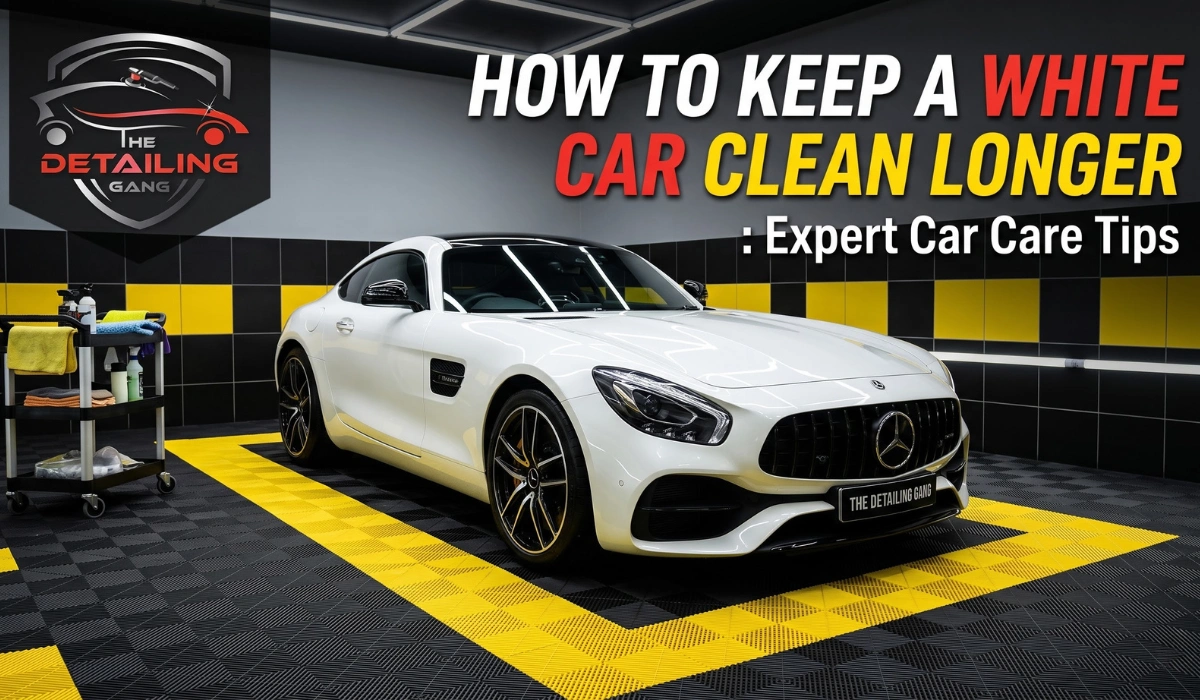
How to Keep a White Car Clean Longer: Expert Car Care Tips
✏ A D Nath | 🔖 Car Care
A white car looks clean, fresh, and elegant when the paint is well maintained. The problem is that white paint can quickly show dust, mud, water spots, bird droppings, road grime, and other stains. Even a small amount of dirt can make the entire car look less attractive.
The good news is that you do not need to wash your white car every day to keep it looking clean. What matters more is using the right washing method, protecting the paint, and dealing with contamination before it becomes difficult to remove.
If you are wondering how to keep a white car clean longer, this guide will help you build a simple routine that works for everyday driving.
Why Does a White Car Get Dirty So Quickly?
A white car does not necessarily collect more dirt than a black, grey, or blue car. The difference is that dirt and stains are much easier to notice against a white surface.
Road dust can create a grey layer on the lower panels. Brake dust can leave tiny orange or brown spots. Rainwater can leave mineral marks after it dries. Bird droppings and tree sap can become obvious within hours.
Common causes include:
- Road dust and mud
- Brake dust and iron particles
- Bird droppings
- Tree sap
- Insects and bug residue
- Water spots
- Traffic pollution
- Tar and road grime
- Pollen
- Strong sunlight and heat
This is why white car care should focus on prevention as much as cleaning.
How to Keep a White Car Clean Longer?
The best way to keep a white car cleaner for longer is to create a regular maintenance routine rather than waiting until the paint becomes heavily dirty.
Here are the most important steps.
1. Wash Your White Car Regularly
Regular washing is the foundation of good maintenance for a white car. You do not have to wash the car every day. For most daily-driven cars, washing once every one or two weeks is a reasonable starting point. You may need to wash more often if you drive through dusty roads, construction areas, or heavy traffic.
The important thing is not to let layers of dirt remain on the paint for too long.
Use a proper car shampoo instead of household cleaning products. A pH-balanced car shampoo is generally a safer choice for regular maintenance because it is designed for automotive paint and existing protection.
If the car has heavy dirt on it, rinse or pre-wash the surface before using a wash mitt. This helps reduce the amount of loose grit being dragged across the paint.
2. Clean the Wheels Before Washing the Body
Your wheels collect brake dust, road grime, and other contaminants. If you clean them after washing the body, dirt from the wheels can splash back onto freshly cleaned paint.
Start with the wheels, tyres and wheel arches. After that, move to the exterior paint.
This simple change can make your washing process cleaner and more efficient. It is also particularly useful for white cars because dark brake dust is easy to notice on white paint.
3. Use a Safe Washing Method
The products you use matter, but the way you wash the car matters just as much. Avoid using an old household sponge or rough cloth. These materials can trap dirt and drag it across the paint. Instead, use a clean microfiber wash mitt and work from the cleaner upper sections of the car towards the dirtier lower sections.
A simple washing sequence is:
- Rinse the car thoroughly.
- Clean the wheels and tyres.
- Pre-wash the exterior if the car is heavily dirty.
- Use a pH-balanced car shampoo.
- Wash one section at a time.
- Rinse the mitt regularly.
- Rinse the vehicle completely.
- Dry the paint with a clean microfiber drying towel.
A careful wash can help reduce unnecessary scratches and swirl marks over time.
4. Never Let Bird Droppings Sit for Too Long
Bird droppings are one of the biggest problems for any car owner. They contain substances that can become aggressive towards automotive paint, especially when the surface becomes hot and the contamination dries.
If you notice bird droppings on your white car, remove them as soon as reasonably possible. Do not aggressively rub a dry dropping with a cloth. Soften it first with water or a suitable car cleaning product and then gently remove it.
The same principle applies to insects, tree sap and other sticky contamination. Quick action is usually easier than trying to remove an old stain later.
5. Dry Your Car Properly to Prevent Water Spots
One reason a freshly washed white car can still look dirty is water spotting. When water dries on the paint, minerals left behind can create visible marks. These marks can be particularly noticeable on white surfaces.
Whenever possible, dry the car after washing instead of allowing water to evaporate naturally. Use a clean, soft microfiber drying towel. Avoid dragging a dirty towel across the paint.
If your local water contains a high level of minerals, water spots can become a bigger issue. In that situation, improving your washing and drying process can make a noticeable difference.
6. Do Not Wash Your Car Under Strong Direct Sunlight
Washing in direct sunlight can make the process harder. Water and shampoo can dry quickly on hot panels, increasing the chance of water spots and soap residue.
If possible, wash your car in a shaded area when the panels are cool. This is especially useful during hot weather. It gives you more time to rinse and dry each section properly.
7. Remove Iron Contamination From White Paint
One of the most overlooked parts of white car cleaning is iron contamination. Brake dust and other sources can leave tiny iron particles on the paint. On a white car, these particles may appear as small orange, brown, or rust coloured spots.
Normal shampoo may not remove bonded iron contamination. A dedicated iron fallout remover can help dissolve these particles before they are rinsed away. However, always follow the product instructions and use it on a suitable surface.
Professional detailing can be useful when the paint has significant contamination. Regular decontamination can help keep white paint looking cleaner and brighter.
8. Use Clay Treatment When Washing Is Not Enough
Sometimes you wash your car carefully, but the paint still does not feel smooth. Run your clean hand gently over the paint after washing and drying it. If the surface feels rough or gritty, the paint may have bonded contaminants. A clay treatment can help remove contamination that normal washing cannot.
These contaminants may include:
- Industrial fallout
- Tar residue
- Tree sap
- Overspray
- Fine iron particles
- Mineral deposits
Clay treatment is not something you need to do every time you wash the car. It is a periodic detailing step. If you are not familiar with the process, professional detailing is safer than aggressively using a clay bar without proper lubrication and technique.
9. Protect the Paint With Wax or Sealant
If your goal is to keep a white car clean longer, paint protection can make maintenance easier. A good wax or paint sealant creates a protective layer over the paint. It can help water and some contaminants sit more on the surface instead of bonding as easily to the paint.
It also makes the car easier to clean in many cases. Wax and sealants do not make the paint immune to dirt, bird droppings, or scratches. They are simply another layer of protection within your car care routine. Choose the protection product based on how much maintenance you are willing to do and how long you want the protection to last.
10. Consider Ceramic Coating for Long-Term Paint Protection
For owners who want easier maintenance and longer-lasting paint protection, ceramic coating for cars is another option. A professional ceramic coating bonds to the prepared paint surface and creates a durable protective layer. One of its practical advantages is hydrophobic behaviour, which can help water and some dirt leave the surface more easily.
This does not mean a ceramic-coated car never needs washing. You still need to wash it correctly. The coating works best when you maintain it according to the manufacturer's recommendations.
Before applying a ceramic coating, the paint should be properly cleaned and prepared. If the paint has oxidation, stains, or significant defects, paint correction may be considered before coating.
11. Park Your White Car Smartly
Where you park can affect how quickly your car becomes dirty. Whenever practical, choose covered or shaded parking.
This can reduce exposure to:
- Direct sunlight
- Bird droppings
- Tree sap
- Falling leaves
- Dust
- Pollen
However, avoid parking under trees simply because the area is shaded. Trees can expose the car to sap, bird droppings, and other contamination. A covered parking space is generally preferable when available.
12. Keep a Microfiber Cloth and Quick Detailer for Small Messes
You do not need to perform a full wash every time you notice a small mark. For light dust or suitable minor contamination, a quality quick detailer can be useful between regular washes.
However, do not use a quick detailer as an excuse to wipe heavy dirt from dry paint. If the surface contains a lot of dust, sand or road grime, washing is the safer approach. Dragging heavy contamination across the paint can create scratches.
13. Do Not Use Household Cleaning Products
One of the easiest mistakes to avoid is using household cleaners on automotive paint. Dishwashing liquid, strong household cleaners, abrasive powders, and other unsuitable products are not designed specifically for maintaining automotive paint.
For car cleaning, use products intended for vehicle surfaces. This also applies to interior cleaners, glass cleaners and wheel products. Always check whether a product is suitable for the surface before using it.
14. Pay Attention to the Lower Half of the Car
The lower sections of your car usually collect more road contamination.
Pay extra attention to:
- Door bottoms
- Side skirts
- Front bumper
- Rear bumper
- Wheel arches
- Mudguards
- Lower doors
White paint can make this dirt particularly obvious. Cleaning these areas properly during routine washes helps the whole vehicle look cleaner.
15. Keep Your Glass and Tyres Clean
A clean white car can still look unfinished if the tyres, glass and exterior trim are dirty.
- Clean glass improves the overall appearance and visibility.
- Clean tyres also create a stronger contrast against white bodywork.
Use products designed for each surface instead of applying one cleaner everywhere. Small details often make a noticeable difference in the final appearance of the car.
What Makes a White Car Look Yellow?
Many owners eventually notice that their white car does not look as bright as it did when it was new.
There are several possible reasons.
- Long-term exposure to sunlight, environmental pollution, contamination, oxidation, and poor maintenance can affect the appearance of automotive paint. Embedded contaminants can also make white paint appear dull or discoloured.
- However, not every yellow or brown mark means the paint itself has permanently changed colour.
- It could be surface contamination, iron fallout, tar, water deposits, or another substance sitting on the paint.
- That is why it is better to identify the cause before using an aggressive polish or cleaner.
How to Prevent a White Car From Looking Dull?
If you want your white car to stay bright, focus on consistency.
A good routine includes:
- Regular safe washing
- Proper drying
- Fast removal of bird droppings and tree sap
- Periodic paint decontamination
- Suitable paint protection
- Shade or covered parking where possible
- Avoiding harsh cleaning products
The goal is not to make the car perfectly clean every minute. The goal is to prevent dirt and contamination from becoming a long-term paint problem.
How Often Should You Wash a White Car?
There is no single schedule that works for every vehicle. A white car used daily in a dusty city may need more frequent washing than a car that stays parked most of the week indoors.
As a practical starting point, wash your car every one or two weeks and adjust the schedule based on actual conditions. You should also wash it sooner when it has been exposed to heavy mud, bird droppings, road grime, or other significant contamination.
A good maintenance routine is better than waiting until the car looks extremely dirty.
White Car Care Routine for Busy Car Owners
If you do not have much time, keep your routine simple.
Every Week or Two
- Wash the exterior using a proper car shampoo and a microfiber wash mitt.
- Clean the wheels and tyres.
- Dry the vehicle properly.
- Remove bird droppings and other fresh contamination quickly.
Every Few Months
- Inspect the paint for roughness.
- Check for iron spots, tar and other bonded contaminants.
- Consider paint decontamination when required.
- Check the condition of your wax, sealant or other paint protection.
When Needed:
Consider professional exterior detailing if the paint looks dull, heavily contaminated, or difficult to clean. If you notice oxidation, stubborn stains or extensive swirl marks, professional paint assessment can help determine whether polishing or paint correction is appropriate.
Common White Car Cleaning Mistakes to Avoid
Keeping a white car clean is not only about what you should do. It is also about avoiding habits that can damage the finish.
1. Washing With a Dirty Sponge:
- A dirty sponge can hold grit and drag it across the paint.
2. Using One Cloth for Everything:
- Do not use the same dirty cloth on wheels, tyres, and paint.
- Keep separate microfiber towels for different surfaces.
3. Wiping Heavy Dust From Dry Paint:
- Dry wiping can move dust and grit across the surface.
- Wash the car instead.
4. Leaving Bird Droppings for Days:
- Fresh contamination is generally easier to remove than dried contamination.
5. Ignoring Water Spots:
- Repeated water spotting can become difficult to remove.
- Dry the car properly after washing.
6. Using Harsh Chemicals:
- Strong household products can be unsuitable for automotive paint.
- Use products designed for the intended surface.
7. Assuming Ceramic Coating Means No Maintenance
- Ceramic coating can make maintenance easier, but it does not eliminate the need for washing.
Is a White Car Harder to Maintain Than a Black Car?
Not necessarily. White paint simply makes certain types of dirt easier to notice. Black cars can hide some dust but often show swirl marks, scratches, and water spots more clearly. White cars can hide some minor paint defects while making road grime, mud and certain stains stand out. So the real difference is visibility, not necessarily how much dirt the car collects.
When Should You Get Professional Car Detailing?
Regular washing is enough for basic maintenance, but professional detailing can be useful when normal washing no longer restores the appearance you want.
Consider professional detailing if:
- The paint feels rough after washing
- You see orange or brown iron spots
- Tar is stuck to the lower panels
- Water spots have become difficult to remove
- The paint looks dull
- The car has heavy contamination
- You want to prepare the paint for ceramic coating
- You want professional paint correction
A professional detailer can inspect the condition of the paint and choose the appropriate treatment instead of simply using more aggressive cleaning products.
Final Thoughts
Learning how to keep a white car clean longer is mostly about building good habits. Wash the car regularly, use safe products, clean the wheels first, dry the paint properly, and remove bird droppings or other aggressive contamination quickly. When normal washing is no longer enough, periodic decontamination can help restore a smoother and cleaner surface.
For owners who want easier maintenance and additional protection, wax, sealants, or a professional ceramic coating can also be considered. You do not need to spend hours cleaning your white car every day. A consistent maintenance routine can keep the paint looking brighter, cleaner, and better for much longer.
Frequently Asked Questions
Q1. How can I keep my white car clean for longer?
Ans. Wash it regularly with a pH-balanced car shampoo, dry it properly, remove bird droppings quickly, and use suitable paint protection. Avoid wiping heavy dust from dry paint.
Q2. How often should I wash a white car?
Ans. For many daily-driven cars, washing every one or two weeks is a practical starting point. Cars exposed to heavy dust, pollution, mud or bad weather may need more frequent cleaning.
Q3. How do I stop my white car from turning yellow?
Ans. Keep the paint clean, reduce prolonged exposure to harsh environmental conditions, and remove embedded contamination when necessary. If the paint looks yellow, identify the cause before using aggressive polishing products.
Q4. Is ceramic coating good for a white car?
Ans. Yes. A professionally applied ceramic coating can provide a protective layer and hydrophobic properties that may make routine cleaning easier. It still requires proper maintenance.
Q5. What is the best car shampoo for a white car?
Ans. White paint does not require a special shampoo simply because of its colour. A good quality pH-balanced car shampoo designed for automotive paint is generally suitable for regular washing.
Q6. Can I use dish soap to wash my white car?
Ans. It is better to use a car shampoo made for automotive paint. Household dishwashing products are not designed as regular car wash products.
Q7. How do I remove orange spots from white car paint?
Ans. Orange or brown spots can sometimes be iron contamination from brake dust or environmental fallout. A suitable iron fallout remover may help, but stubborn contamination is better handled through professional detailing.
Q8. Does waxing help keep a white car clean?
Ans. Wax can add a protective layer and make the surface easier to maintain. It does not stop dirt from reaching the car, but it can make routine cleaning easier.
Q9. Can professional detailing make an old white car look better?
Ans. Yes. Depending on the paint condition, professional detailing can remove contamination, improve gloss, and address certain paint defects. Paint correction may also be appropriate when the clear coat has swirl marks or other defects.
Q10. Should I use a clay bar on a white car?
Ans. A clay bar can help remove bonded contaminants that washing cannot remove. It should be used only when necessary and with proper lubrication and technique.
 Recent Posts