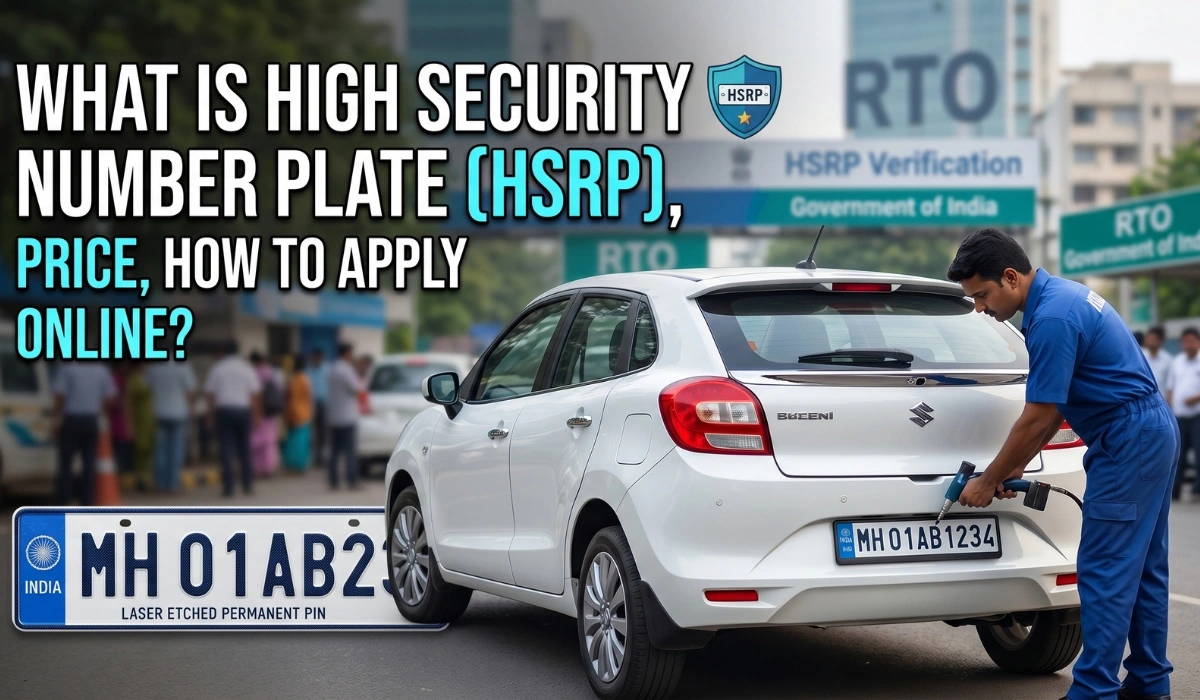
What is High Security Number Plate (HSRP), Price, How to Apply Online?
✏ A D Nath | 🔖 Car Care
If you recently bought a car or still drive a vehicle registered before 2019, you have probably heard about the HSRP number plate rule in India. Over the last few years, traffic authorities and transport departments across different states have made high-security registration plates mandatory for almost every vehicle on the road.
Still, many vehicle owners are confused about what HSRP actually means, why it is compulsory, how much it costs, and how to apply online. This blog explains everything in simple words so you can understand the complete process without confusion.
What is an HSRP Number Plate?
A High Security Registration Plate, commonly called an HSRP, is a special vehicle number plate made from high-quality aluminium. It comes with advanced security features that help authorities identify vehicles easily and reduce cases of theft, fake registration plates, and illegal tampering.
The Government of India introduced HSRP under Rule 50 of the Central Motor Vehicles Rules (CMVR), 1989. Unlike old number plates that could be easily copied or modified, HSRP plates are designed to be tamper-proof and digitally traceable.
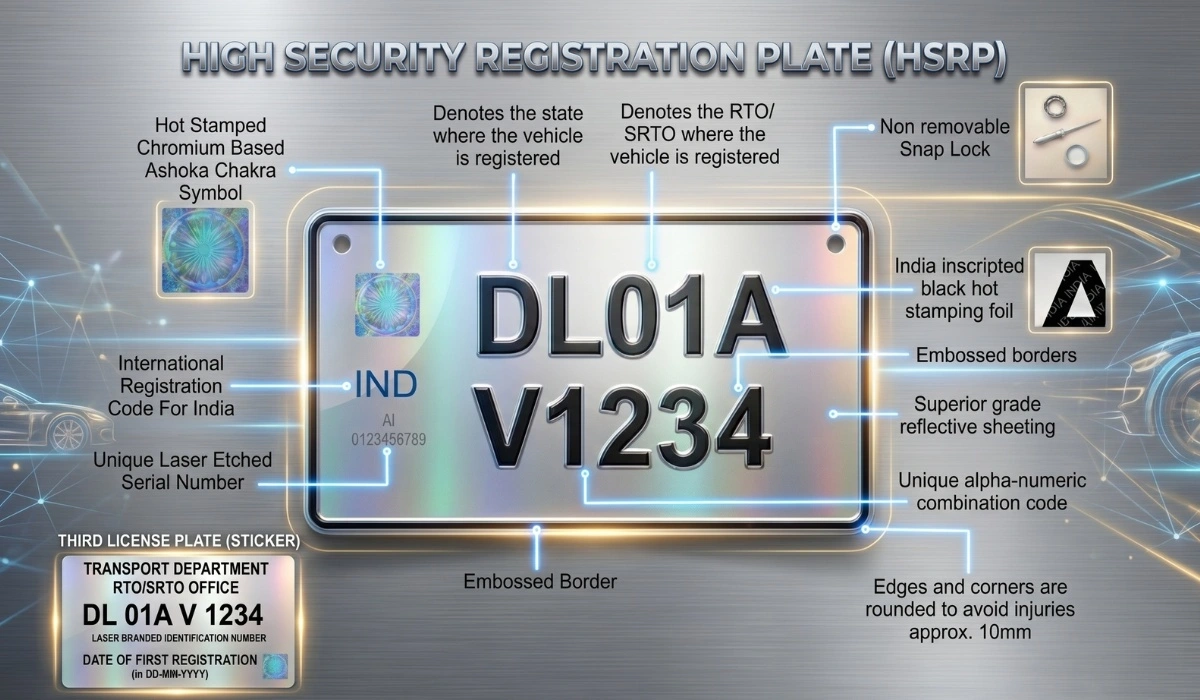
Every HSRP number plate includes:
- A hot-stamped chromium Ashoka Chakra hologram
- A unique laser-etched identification number
- Reflective film for better night visibility
- Non-removable snap locks
- A blue IND mark
These features make it difficult for criminals to duplicate or replace the number plate.
Why is HSRP Mandatory in India?
The government made high-security number plates compulsory to improve road safety and vehicle tracking across the country. Earlier, many vehicles used customised fonts, fancy plates, or low-quality number plates that were difficult to read. Criminals could also replace plates easily after vehicle theft.
With HSRP, every registration plate gets connected to a centralised database. This helps transport authorities and traffic police identify vehicles quickly through CCTV cameras and ANPR systems. Today, almost every state has strict rules regarding HSRP installation. Driving without an HSRP can lead to heavy fines ranging from Rs. 5,000 to Rs. 10,000, depending on your state and violation history.
Main Features of an HSRP Number Plate
Here are the key features that make an HSRP different from a normal number plate.
1. Chromium Ashoka Chakra Hologram
Every HSRP comes with a hot-stamped Ashoka Chakra hologram placed on the top left side of the plate. This hologram proves authenticity and prevents duplication.
2. Laser-Etched Unique PIN
A 10-digit laser-engraved permanent identification number is printed on the plate. This PIN connects directly with your vehicle details, including chassis number and engine number.
3. Reflective Sheeting
The plate uses retro-reflective material that improves visibility at night. Traffic cameras can also read these plates more accurately.
4. IND Mark
A blue-colored IND symbol appears on the left side of the plate. This standardises vehicle registration across India.
5. Snap Lock System
HSRP plates use special non-reusable snap locks. If someone tries to remove the plate forcefully, the lock breaks permanently. This makes plate swapping extremely difficult.
Which Vehicles Need HSRP?
The simple answer is almost every vehicle.
- Vehicles That Already Have HSRP: Vehicles registered after April 2019 usually come with factory-installed HSRP plates.
- Vehicles That Need HSRP Installation: If your vehicle was registered before April 2019, you must apply for a new HSRP.
This includes:
- Cars
- Bikes
- Trucks
- Buses
- Tractors
- Scooters
- Auto-rickshaws
- Commercial vehicles
Even older vehicles still running legally on Indian roads must upgrade to HSRP.
What is the Price of an HSRP Number Plate?
The HSRP number plate price depends on the type of vehicle and your state. On average, these are the common price ranges:
| Vehicle Type | Approximate Price |
| Two-Wheeler | Rs. 300 to Rs. 400 |
| Car / LMV | Rs. 700 to Rs. 1,100 |
| Commercial Vehicle | Rs. 1,000 to Rs. 1,500 |
The price generally includes:
- Front and rear HSRP plates
- Colour-coded fuel sticker
- Installation charges
If you choose doorstep installation, additional convenience charges may apply.
What are Colour-Coded Stickers?
Along with the HSRP plate, many vehicles also require a colour-coded fuel sticker on the windshield. These stickers help authorities identify fuel type quickly.
Sticker Colors
- Blue Sticker for Petrol and CNG vehicles
- Orange Sticker for Diesel vehicles
- Green Sticker for Electric vehicles
Some stickers also include BS-VI compliance markings. Driving without the required sticker can result in additional penalties in certain cities.
How to Apply for HSRP Online?
The online process is simple and takes only a few minutes. Many states use portals like Book My HSRP or SIAM-authorised websites.
Here is the step-by-step process.
Step 1: Visit the Official HSRP Portal
Go to your state-authorised HSRP booking website. Most vehicle owners use:
- BookMyHSRP
- SIAM HSRP portal
- State transport websites
Step 2: Enter Vehicle Details
Fill in the required information:
- Vehicle registration number
- Chassis number
- Engine number
- Mobile number
- Address details
Step 3: Select Vehicle Type
Choose whether your vehicle is:
- Two-wheeler
- Four-wheeler
- Commercial vehicle
- Private vehicle
For personal vehicles, select the non-transport option.
Step 4: Choose Installation Location
You can select:
- Authorized dealership
- Fitment center
- Home installation option in selected cities
Step 5: Make Online Payment
Complete the payment through:
- UPI
- Debit card
- Credit card
- Net banking
After payment, you will receive a booking receipt and appointment details.
Step 6: Get HSRP Installed
- Visit the selected centre on your appointment date.
- The technician installs the plate using special snap locks.
- The process usually takes less than 15 minutes.
How to Check HSRP Status Online?
You can easily track your booking status online.
Simply:
- Visit the same HSRP portal
- Click on "Check Status"
- Enter registration number and chassis details
The system will show:
- Order confirmed
- In production
- Ready for fitment
- Installed
Difference Between HSRP and Normal Number Plates
Many people still wonder why HSRP is better than old plates. Here are the major differences.
| Feature | Normal Plate | HSRP |
| Material | Basic metal or plastic | Aluminium |
| Security | Easy to duplicate | Tamper-proof |
| Identification | Limited | Laser PIN linked |
| Visibility | Normal | Reflective |
| Removal | Easy | Snap-lock system |
| Standardization | Different styles | Uniform design |
The biggest advantage is improved security and centralised tracking.
Benefits of HSRP Number Plates
Installing an HSRP number plate offers several practical benefits.
- Better Vehicle Security: Tamper-proof locks reduce the chances of number plate theft and misuse.
- Easy Vehicle Identification: Traffic police and cameras can identify vehicles quickly.
- Reduced Fraud: Laser-coded registration numbers make duplication difficult.
- Standardised System: All vehicles follow one uniform registration format across India.
- Improved Night Visibility: Reflective material improves readability during night driving.
- Digital Tracking: Authorities can connect your plate with the national Vahan database instantly.
Penalty for Not Having HSRP
Driving without an HSRP can create legal problems. Under the Motor Vehicles Act, authorities can impose fines between
- Rs. 5,000 for the first offence
- Up to Rs. 10,000 for repeat violations
Some states have already started strict checking drives. In certain cases, non-compliant vehicles may also face:
- Delays in ownership transfer
- Problems during fitness renewal
- Trouble with pollution certificate verification
So it is better to install HSRP before enforcement becomes stricter.
Important Tips Before Applying for HSRP
Before booking your HSRP online, keep these points in mind:
- Always use authorised government portals
- Double-check chassis and engine numbers
- Keep RC copy ready
- Avoid local duplicate plate vendors
- Save your payment receipt
- Reach the fitment centre on time
Using fake or unauthorised plates may lead to penalties.
Final Thoughts
The HSRP number plate system is a major step toward safer and more organised roads in India. While many vehicle owners initially saw it as just another government rule, the truth is that HSRP improves security, reduces fraud, and helps authorities track vehicles more efficiently. If your vehicle still has an old number plate, this is the right time to switch to an HSRP. The online process is simple, affordable, and quick.
Once installed, you can drive with peace of mind knowing your vehicle follows the latest legal and safety standards. For every responsible car owner, upgrading to a High Security Registration Plate is no longer optional. It is an important part of owning and maintaining a vehicle in modern India.
 Recent Posts